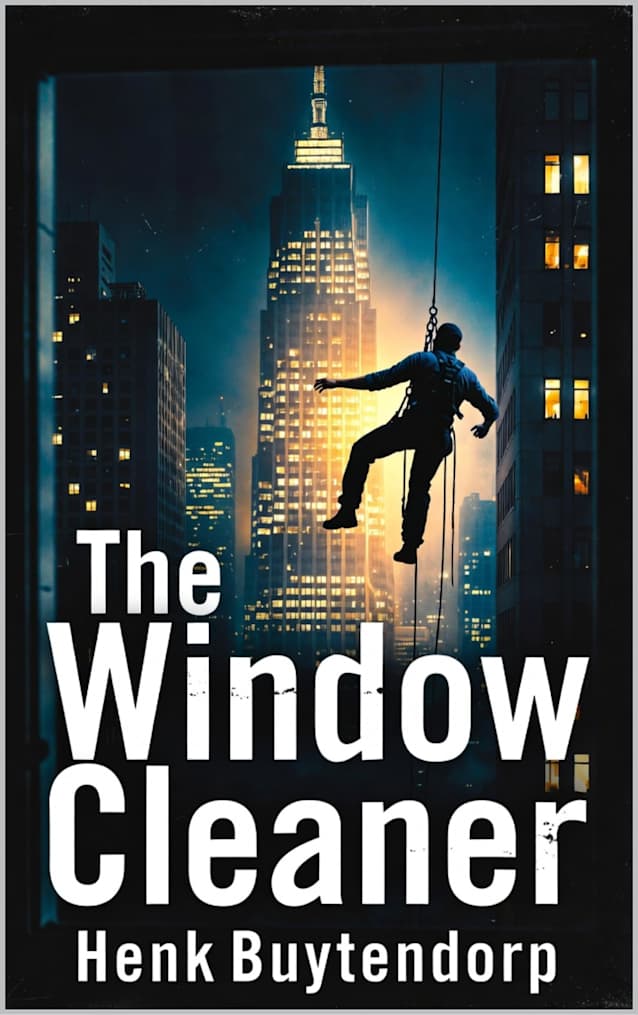
The Window Cleaner
About
Roger Froling was once Staff Sergeant Roger Froling of the 75th Ranger Regiment — fast-rope master, urban assault specialist, the man you called when you needed to insert onto a rooftop in Mogadishu or extract from a high-rise in Karachi without anyone knowing you’d been there. Then came Operation Silent Echo in Kandahar. A compromised night raid. An IED chain that folded a building inward like wet cardboard. Roger rode the collapsing stairwell down three stories, femur snapped, shrapnel in the thigh, ears ringing, white noise. He crawled out,t dragging two teammates. One lived. One didn’t.
The after-action report was brutal. Command needed a scapegoat—dishonorable discharge. No pension. No benefits. Roger walked out of Fort Bragg with a cardboard box and a DD-214 stamped in red. He disappeared.
For the next three years, he survived on odd jobs — construction rigging in Jersey, then legitimate high-rise window cleaning on the old Art Deco towers. The heightno longer scarede hie. It welcomed him back.
Then came the anonymous email: “You still like heights? We pay better than the union.”
First job: fifty thousand cash to plant a passive audio pickup on a hedge-fund CEO’s penthouse balcony. He did it. Second job, same rate. Third, double. He stopped asking who the client was. Stopped caring why. The money bought distance — from the Army, from the past, from the ground.
Three years later, he was the rope guy. And his biggest contract was One Vanderbilt — eighty stories of mirrored confidence beside Grand Central.
Chapter 1 opens at dawn. Roger hangs outside the QuantumForge boardroom on the 80th floor, disguised as a window cleaner. He plants the first bug: a coin-sized masterpiece of passive espionage — no battery, no RF emissions, powered by the glass’s own vibrations, harvesting sound waves and micro-reflections. By sunrise, he’s gone. That night, in a greasy Queens diner, he hands the encrypted wafer to Viktor Kuznetsov for fifty thousand cash.
Viktor is mid-forties, tailored coat, neatly trimmed beard — too clean for the diner’s cracked vinyl booths. He’s the broker—the middleman. Apex Volt wants QuantumForge’s breakthrough solid-state battery tech — an ultra-safe electrolyte, ten-minute charging, and massive range. Roger’s bugs are the only way to steal it in real time.
Over the next few weeks, Roger bids aggressively on cleaning contracts, leverages old military contacts for blueprints and exec schedules, and plants more bugs during storms and blackouts. The bugs are passive perfection: laser vibrometry in miniature, optical inference at the edge of physics. They drink sound from the glass itself, snatch stray photons, reconstruct faces, lips, formulas, timelines.
Inside QuantumForge, CEO Dr. Katrin Mueller unveils the holy grail: a sulfide-based electrolyte with 12 mS/cm conductivity, non-flammable, stable to 4.7 volts, and a 10-minute 0–80% charge time—cycle life: 98.7% retention after 1,000 cycles. The boardroom buzzes with pride and paranoia. Mueller warns: “No leaks. Lifetime NDAs. Eight-figure liquidated damages.”